
Energy Balance Regulation After 40
An exploration of the physiological mechanisms and lifestyle factors influencing human energy expenditure in midlife and beyond.
Educational content only. No promises of outcomes.

Overview of Age-Related Energy Balance Changes
After the fourth decade of life, human energy regulation undergoes measurable shifts. Scientific observation across multiple population studies indicates that total daily energy expenditure changes, driven by alterations in basal metabolic rate, body composition, physical activity patterns, and metabolic adaptation mechanisms.
This phenomenon represents not a single biological process but a constellation of interconnected physiological adjustments. Understanding these mechanisms provides context for the observed patterns in energy balance during midlife.

Decline in Basal Metabolic Rate
Basal metabolic rate—the energy expenditure at rest—demonstrates a consistent age-related decline across longitudinal studies. Research indicates an approximate decrease of 2–8% per decade after age 30, accelerating after age 60.
| Age Range | Average BMR Change | Contributing Factor |
|---|---|---|
| 30–40 years | Minor decline (≤2%) | Minimal muscle loss |
| 40–50 years | 2–5% decline | Progressive sarcopenia begins |
| 50–65 years | 5–8% decline | Accelerated muscle atrophy, hormonal shifts |
| 65+ years | 8%+ cumulative decline | Compounded metabolic adaptations |
Primary contributors to this decline include loss of lean muscle mass, changes in mitochondrial efficiency, alterations in thyroid hormone signaling, and shifts in sympathetic nervous system activity.
Changes in Body Composition Over Time
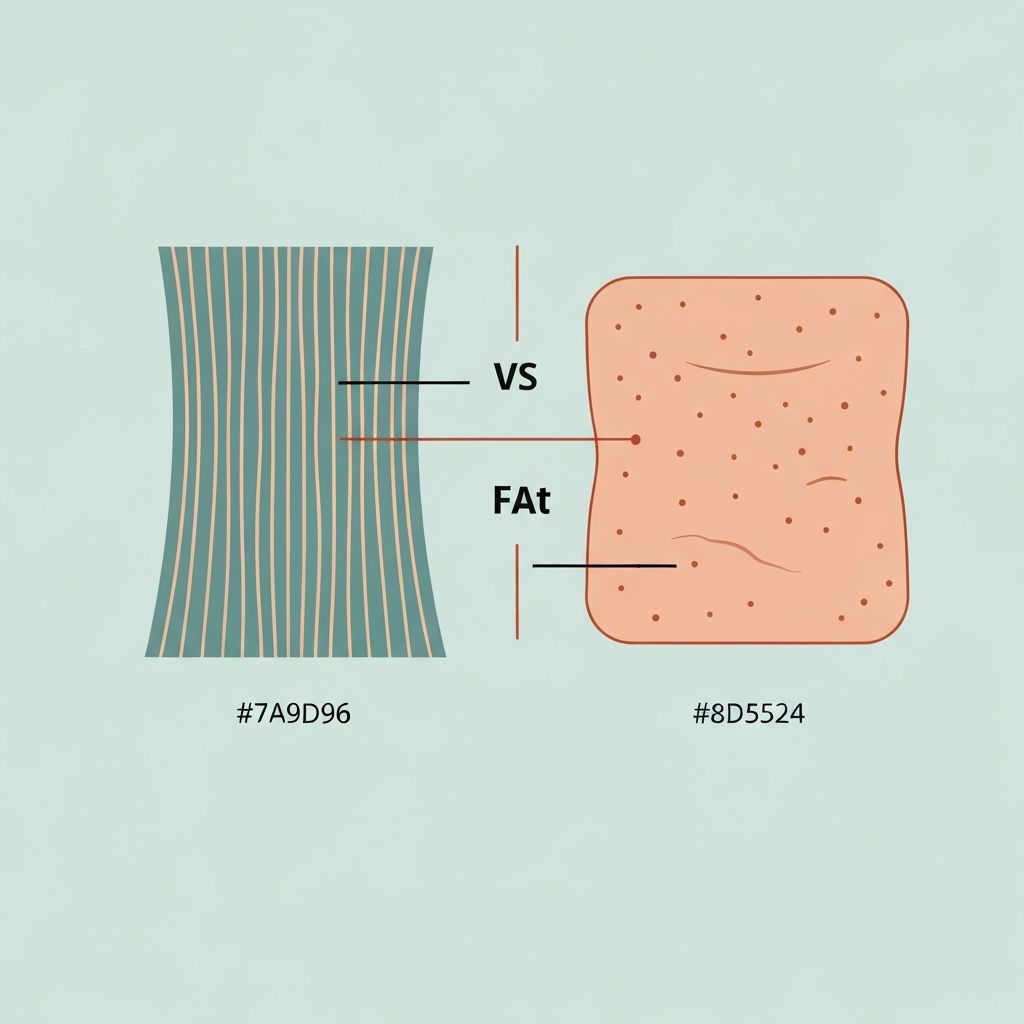
Body composition—the ratio of muscle to adipose tissue—undergoes progressive shifts during midlife. Cross-sectional and longitudinal studies document gradual muscle mass loss coupled with relative increases in adipose tissue, even when total body weight remains stable.
This process, termed sarcopenia, reflects age-related decline in muscle protein synthesis, reduced motor neuron function, and decreased physical activity levels. The consequence is reduced metabolic activity per unit of body mass, as muscle tissue is more metabolically active than fat tissue.
Hormonal Influences After Age 40
Endocrine changes constitute a significant component of midlife energy regulation shifts. Research documents age-related alterations in multiple hormonal systems:
- Growth Hormone: Declines approximately 14% per decade after age 30, reducing protein synthesis and muscle maintenance.
- Thyroid Hormones: TSH increases while free T3 may decline, modulating metabolic rate.
- Sex Hormones: Estrogen and testosterone levels decline, affecting metabolic regulation and body composition.
- Insulin Sensitivity: Age-related decline in insulin action increases metabolic demand and alters nutrient partitioning.
- Cortisol Patterns: Altered circadian rhythm of cortisol may influence energy metabolism and fat distribution.
These hormonal shifts do not determine energy balance but rather modify the physiological substrate within which energy regulation occurs.
Reduction in Non-Exercise Activity Thermogenesis
Non-Exercise Activity Thermogenesis (NEAT)—energy expended through occupational tasks, spontaneous movement, and daily living—represents a significant but highly variable component of total daily energy expenditure.
Population-level observations suggest NEAT declines with age, potentially due to changes in occupational patterns, sedentary behavior increases, reduced spontaneous fidgeting, and altered movement patterns. NEAT may account for 15–30% of total daily expenditure and shows substantial individual variation.

Impact of Physical Activity Levels
Structured and unstructured physical activity contribute substantially to total energy expenditure. Population-level studies document a general age-related decline in both intensity and volume of physical activity:
Sedentary Behavior
Increases during midlife years, reducing active energy expenditure and contributing to declining NEAT.
Moderate-Intensity Activity
Participation typically remains relatively stable but may decline in duration and intensity relative to younger populations.
Vigorous-Intensity Activity
Shows steeper age-related decline, with fewer individuals over 50 engaging in high-intensity exercise.
These patterns reflect complex interactions between occupational demands, health status, motivation, and environmental factors rather than pure physiological constraints.
Metabolic Adaptation Mechanisms in Midlife
Beyond primary changes in BMR and activity, the body employs adaptive mechanisms that modify energy expenditure in response to perceived energy imbalance.
Research suggests that metabolic adaptation—reduction in energy expenditure during energy deficit—may become more pronounced with age. Simultaneously, adaptive thermogenesis in response to overfeeding may decline, affecting energy balance regulation precision.
Lifestyle and Environmental Factors
Population studies document correlations between energy balance changes and various lifestyle and environmental variables:
- Occupational type and structure
- Urban vs. rural living environment
- Commute patterns and transportation methods
- Availability and consumption of highly processed foods
- Sleep duration and quality
- Stress levels and chronic disease prevalence
- Social engagement and activity patterns
- Healthcare access and preventive interventions

Links to In-Depth Topic Articles
Explore detailed scientific overviews of specific mechanisms:
Age-Related Decline in Basal Metabolic Rate
What Studies Show
Sarcopenia and Energy Expenditure
Its Role in Energy Balance Changes
NEAT Reduction in Midlife
Observations from Research
Hormonal Shifts and Energy Balance
After 40: Endocrine Context
Metabolic Adaptation
Response to Energy Imbalance in Older Adults
Lifestyle Correlates
Energy Regulation in Midlife
Common Research Findings Summary
Key takeaways from epidemiological and mechanistic studies:
- Total daily energy expenditure declines approximately 1–2% per decade after age 30, accelerating after age 60.
- Basal metabolic rate shows the most consistent age-related decline, primarily driven by muscle mass loss.
- Body composition shifts—reduced muscle, increased adipose relative distribution—occur independent of weight changes.
- Hormonal alterations support metabolic decline but do not fully account for observed changes.
- Activity level reductions contribute significantly but represent one component of total expenditure change.
- Substantial individual variation exists, suggesting genetic, behavioral, and environmental modulators.
- Longitudinal data indicate metabolic trajectories are not strictly predetermined but show responsiveness to lifestyle factors.

Frequently Asked Questions
A: Population-level data document age-related declines in energy expenditure, but individual trajectories vary substantially. The decline is not predetermined but reflects complex physiological and behavioral interactions.
A: Research indicates that certain metabolic parameters respond to behavioral interventions. However, characterizing the degree and durability of such responses requires individual assessment and consideration of baseline factors.
A: Muscle mass loss accounts for a substantial portion of the BMR decline—estimated at 40–60% in some studies—though the exact proportion varies based on population and methodological factors.
A: Hormonal alterations play a significant role, but mechanistic studies suggest they act synergistically with muscle loss, activity changes, and metabolic adaptation rather than as sole determinants.
A: Population-level correlations document associations between energy regulation and occupational patterns, physical environment, activity access, and dietary availability. Mechanistic pathways remain subjects of ongoing research.
A: Yes. Cross-sectional and longitudinal data document substantial variation, with some individuals showing minimal metabolic decline while others show pronounced changes. This variation suggests genetic and behavioral modulators.
Further Exploration
This educational platform presents an overview of current evidence regarding energy balance regulation across the lifespan. For detailed investigation of specific mechanisms, mechanistic studies, or individual application of research findings, explore our in-depth articles or consult primary research literature.