
Age-Related Decline in Basal Metabolic Rate
What Studies Show: Longitudinal Evidence and Physiological Mechanisms
Introduction
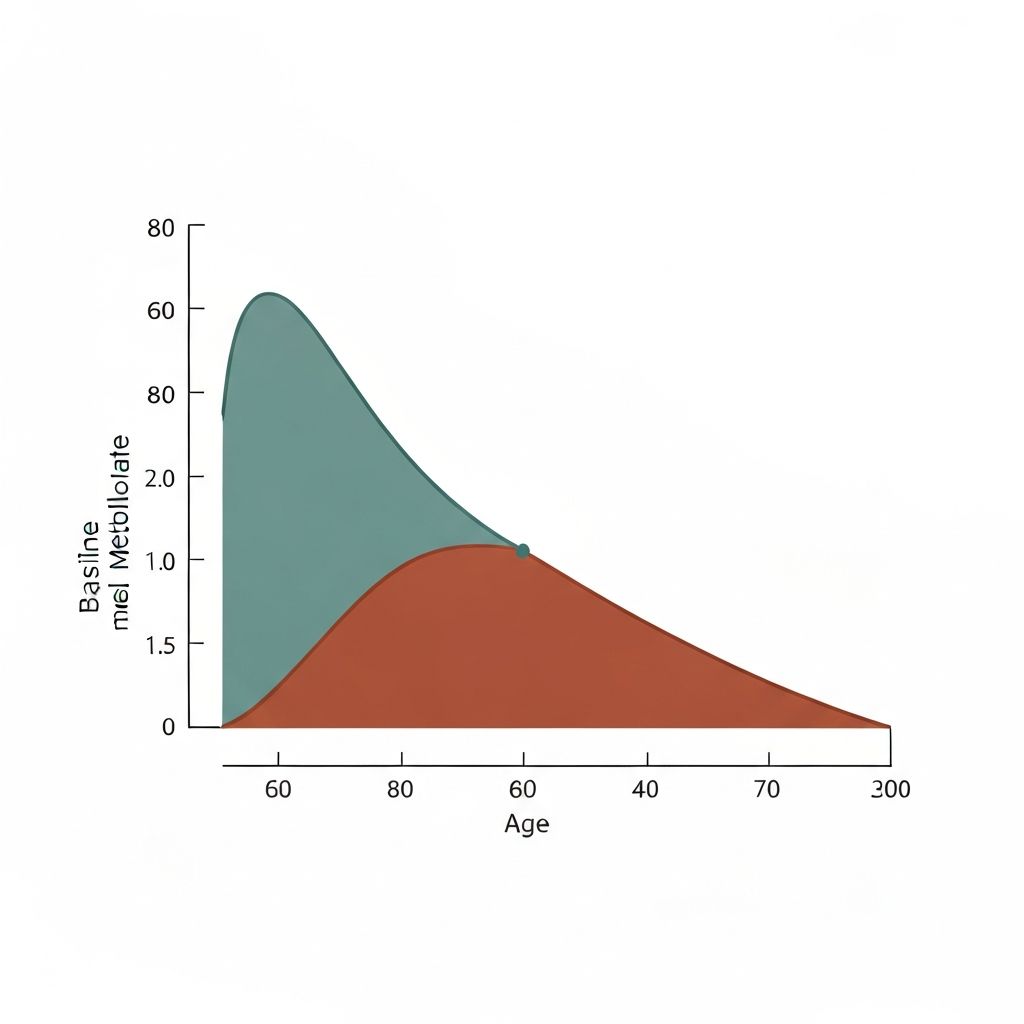
Basal metabolic rate (BMR)—the energy expended by the body at rest to maintain essential physiological functions—represents one of the most consistent and measurable markers of age-related metabolic change. Longitudinal studies spanning decades document a reliable decline in BMR beginning in early adulthood and accelerating across the lifespan.
Longitudinal Evidence
Research utilizing longitudinal study designs—following the same individuals across years or decades—provides robust evidence of BMR decline. Classic studies such as the Baltimore Longitudinal Study of Aging have documented the trajectory of BMR change across the adult lifespan:
- Average decline of approximately 2–8% per decade after age 30
- Steeper decline after age 60, with some studies documenting 10% decline per decade in very elderly populations
- Substantial individual variation, with some individuals showing minimal decline and others showing pronounced change
- Gender differences, with some studies noting slightly different trajectories between men and women
Cross-sectional data corroborate these findings, though longitudinal designs provide stronger evidence for true age-related change versus cohort effects.
Primary Contributing Factors
Scientific investigation has identified multiple physiological mechanisms contributing to BMR decline:
Lean Mass Loss
Progressive decline in skeletal muscle mass, accounting for approximately 40–60% of BMR reduction. Muscle tissue exhibits higher metabolic activity at rest compared to adipose tissue.
Mitochondrial Efficiency
Age-related changes in mitochondrial density and oxidative capacity may reduce the metabolic activity per unit of muscle mass.
Thyroid Function
Alterations in thyroid hormone levels and tissue responsiveness contribute to metabolic rate modulation, though thyroid pathology does not fully explain the decline.
Hormonal and Neurological Influences
Beyond structural changes in body composition, hormonal and neurological systems exert regulatory control over BMR:
- Growth Hormone: Declining secretion with age reduces protein synthesis and muscle maintenance, indirectly affecting BMR.
- Thyroid Hormones: Age-related changes in T3 and T4 levels modulate resting metabolic rate.
- Sympathetic Nervous System: Reduced catecholamine sensitivity and altered adrenergic signaling affect metabolic activity.
- Adipokines: Changes in leptin and adiponectin may influence metabolic regulation.
Relationship Between BMR Decline and Total Energy Expenditure
BMR decline does not account for the entirety of age-related reduction in total daily energy expenditure. While BMR typically comprises 60–75% of total energy expenditure in sedentary individuals, other components—activity thermogenesis and non-exercise activity thermogenesis—show age-related reduction independent of BMR changes.
The compounding effects of BMR decline, reduced activity levels, and metabolic adaptation represent interconnected physiological processes rather than independent phenomena.
Individual Variability and Modulators
Substantial variation exists in the degree and rate of BMR decline across individuals. Research suggests potential modulators:
- Genetic Factors: Family history and genetic polymorphisms may influence individual metabolic trajectories.
- Physical Activity Patterns: Maintained muscle mass through resistance activity may moderate BMR decline.
- Body Composition Baseline: Individuals with greater lean mass may experience different absolute and relative BMR changes.
- Chronic Disease Prevalence: Age-related disease may affect metabolic parameters.
- Nutritional Status: Nutritional factors influence muscle protein synthesis and maintenance.
Mechanistic Studies and Future Research
Ongoing research utilizing molecular and cellular techniques continues to elucidate mechanisms underlying BMR decline. Areas of investigation include mitochondrial function, gene expression changes, hormonal signaling pathways, and neurological regulation of metabolism.
Related Topics
Explore: Sarcopenia and Its Role in Energy Expenditure Changes
Explore: Metabolic Adaptation in Response to Energy Imbalance